A coronavirus horror story – or the Polder Model’s finest hour?
King’s Day in the Netherlands is always more or less the same. Almost the whole country takes the day off, and the streets are flooded with people dressed in orange, drinking beer and generally acting as if they’ve been given get-out-of-jail-free cards. Except this year, in the age of coronavirus, it wasn’t like that at all. The celebrations last Monday were muted, and when I passed briefly through Gouda that morning I found no music being played, no beer being drunk, and almost no-one wearing orange. The bars were closed and the main square was empty. Arriving back home, I caught the tail end of the King’s address to the nation on TV. “I intensely looked forward to images of … the Dutch going completely out of their minds”, he said, posing rather awkwardly next to a staircase in one of the royal palaces. “However, it was not to be so… The disappointment was palpable.”
The King isn’t alone in finding the current situation difficult to comprehend. In many ways, the Dutch have experienced the Covid-19 pandemic just as many others in Europe have. With the health system under terrible pressure, the country has been locked down for weeks. Millions of people have been working from home, holidays have been cancelled and businesses are operating awkwardly using Zoom. Schools and daycare centres are largely closed, most restaurants are shut, and even the brothels have switched off their red lights. People without kids are apparently watching lots of Netflix, while people with kids are quickly coming around to the idea that teachers should be paid more. Everyone misses bars, and everyone needs a haircut.
In many other ways, however, the Netherlands’ lockdown is quite different to those imposed elsewhere. In other parts of Europe, most “non-essential” stores remain closed and personal freedom is tightly restricted, but here much remains open. In Gouda (the town nearest to where I live) most of the eateries on the main square have been sealed off like crime scenes but many of the clothes shops, bookshops, cookery shops and jewellery shops are still open. (Sadly, the local risk consultancy business is closed.) I’ve mostly stayed at home for two months now, but if I wanted to I could go out to browse new shoes in the sports shop tomorrow, get some keys cut, eat a sandwich at Subway, choose some new furniture at the woonboulevard, have a new passport photo taken and then buy a fresh stroopwafel on the way home. At the national level, one large-scale survey carried a few weeks ago by the bank ING found that forty percent of Dutch people were still going out to work every day as normal. Many of those people are probably essential workers, but some are not, and the definition of what constitutes “essential business” often feels loose. Last week, Dutch social media feeds were filled with photos of long lines outside Ikea stores across the country. “It really is not a good idea to go to Ikea to buy a mug or a plant”, one virologist in Leiden told the Parool. “I understand that people want to go out and do normal things again. But, unfortunately, life is not normal.” The Dutch lockdown, in short, isn’t that locked and isn’t that down.
The differences between the Netherlands and many other European countries aren’t just anecdotal. According to Oxford University’s “government response stringency index”, the lockdown here not only started later than those in countries including Belgium, Denmark, Germany and France, but has mostly been much laxer. (The British locked down later than the Dutch but have been somewhat stricter since then.) The Dutch “intelligent lockdown” feels in many ways like the epitome of the famous ‘Polder Model’ in action: the government has consulted with experts, discussed everything for ages, and then ended up choosing a middle way which feels like a hybrid of the American, Scandinavian and German approaches, and which doesn’t really please anyone. Comparing Dutch government’s lockdown rules directly with their British equivalents, the differences are striking. In Britain, the government says “you should not be meeting friends unless you live in the same household”; while in the Netherlands, the official guidance says merely “have as few visitors as possible (no more than 3 at a time)”. In Britain, the government says “you can… go outside once a day for a walk, run or cycle [but] you must minimize the time you are out of your home”; while in the Netherlands they say unlimited “walking, cycling or running outside remains permitted”. In Britain, the government says “make sure you are at least two metres or six feet away from other people”, while in the Netherlands they say “keeping your distance means staying at least 1.5 metres away from others”. And so on. “This is a grown-up country”, Prime Minister Mark Rutte explained, in the proud tones of a parent letting a teenager borrow the car keys for the first time. “People are glad that they are treated as adults, not as children”.
Unfortunately, it’s not hard to find evidence that the laid-back lockdown has come at a price. As armchair epidemiologists have been quick to point out, the Dutch death toll is (relative to the size of the population) far lower than in places like Spain or Italy, but far higher than in Denmark, Germany and most of Scandinavia. At the time of writing, the Netherlands has roughly three times the population of Denmark but more than ten times as many recorded coronavirus deaths. And (as in many countries) the official death tolls here are probably seriously under-reported, with coronavirus testing very limited and many deaths (including in elderly care homes) likely going unrecorded. The government’s strategy has sometimes been unclear, and foreign verdicts on the Dutch approach to fighting the pandemic (including an early dalliance with ‘herd immunity’) have often been harsh. “The Dutch government is incompetent and ridiculous in its response to the coronavirus crisis,” the mayor of one Belgian town near the border said in March, when the Belgians were locking down hard but the Dutch weren’t. “The Netherlands is doing nothing, so we have to protect ourselves.” The mayor of another border town called the Netherlands “the weakest link in the European chain.” A Dutch acquaintance of mine was even harsher. “If even the Belgians think you’ve f***ed up, then you must have done something really wrong”.
Within the Netherlands, there’s also been strong criticism of the government’s approach. Geert Wilders, for example, has moved seamlessly between castigating Muslim women for wearing face coverings in public and expressing outrage that more people don’t wear anti-viral face masks. Yet overall, it’s striking how little dissent there’s been. Mark Rutte has won plaudits for his calm, bank-manager leadership style. As so often, the Dutch state has also been a model of constructive bipartisanship – when the health minister abruptly resigned a few weeks ago, he was replaced not by someone from within the governing coalition, but by a member of the opposition Labour Party, or PvdA. (“This crisis is so big that party colour is irrelevant” Rutte said.) Some people I speak to are angry at the government’s performance, but most seem quite content; trusting their leaders to do the right thing. Curiously, one of the more reliable mortality datasets, produced by the FT using excess mortality figures (that is, the difference in the total number of people dying now compared with the same time last year) shows that the Netherlands has experienced 52% more deaths than in a usual year – exactly the same increase as in Britain. Yet the political atmosphere is far less febrile, and most people seem surprisingly content. A few weeks ago, posters appeared on many of the roads around Gouda, addressed to Rutte and several other politicians (from multiple parties) who are leading the coronavirus response, bearing a simple message: “THANK YOU, for leading our country in this Dutch way”. A little trite, maybe, but oddly touching – and not something one’s likely to see in certain other countries right now.
Why, then, has the Dutch lockdown been so laid back, and so widely accepted? The explanation is, I think, partly cultural. The Netherlands is a nation surrounded by existential natural threats, and the Dutch authorities have over the years become exceedingly competent at keeping them at bay. Talk of “first waves” and “second waves” deluging the country have a particular resonance here. Political turmoil is limited, serious violence is rare, and there’s been no conflict on Dutch soil for three-quarters of a century. Partly as a result, surveys show that most people have faith that the government is competent and trustworthy, and are reasonably content to just let them get on with things. However (if you’ll forgive a bit of cultural stereotyping) the Dutch also don’t much like being told what to do. Watching the lockdown unfold, I’m often reminded of the Dutch policy on soft drugs, which essentially consists of making clear rules against things but then refusing to enforce them. Above all, the Dutch often take pride in not panicking during a crisis. Even vaguely hinting that they might be ill-informed or careless can feel like telling French people that their food’s bad or Germans that they don’t know how to make good cars: a blatant assault on core national values. The problem, though, is that the much-loved nuchterheid (sobriety) sometimes veers uncomfortably close to roekeloosheid (recklessness).
This week, the government announced that most of the lockdown will be lifted soon. Things like nursery schools and hairdressers will reopen next week, and bars, restaurants and cinemas soon thereafter. Sex clubs will sadly remain closed until September. The changes in some ways feel inevitable – lockdowns can’t last forever, and impose their own colossal economic, social and public health costs. But again, the Dutch seem to be taking a more liberal approach than many of their neighbours. In Germany, for example, the lockdown is also being eased, but mask use is widespread and the plans for reopening cinemas, day care and restaurants remains unclear. The UK, similarly, also looks set to announce some easing, but hasn’t been in a hurry to provide much detail – Dominic Raab has said setting a timetable for changing the strategy would be “irresponsible”. In France, restrictions are easing but will remain stricter in Paris. Things are changing fast, but the Dutch lockdown looks likely to have started later, been less strict, and been lifted earlier than those in many other places.
As restrictions are eased, it’s easy for people like me (with a pre-existing health condition) to be worried. Testing remains limited, and tracing apps seem a long way from widespread roll-out. Even after nearly two months of lockdown, I’m amazed by how many people still approach me with basic questions about what the current rules are: are they allowed to have friends around? Can they go clothes shopping? Isn’t this just the flu? People interpret the guidelines differently, and while some act as if there’s been a nuclear war and it’s perilous to step outside, others carry on with normal life much as they did before. As new rules are introduced, these problems with consistency may worsen – why, for example, should people feel compelled to work from home to stay safe if they’re also allowed to go out for beers and have dinner with friends in the evening? When I cycled past my local park this morning, I noticed it was busier than it’s been for weeks – partly because the weather’s nice, but probably also because people have already started to relax. When I think about the primary schools re-opening next week, and all the parents going to drop their kids off and seeing their friends for the first time in months, and arranging to have coffee at the weekend, and then stopping at the shops on the way home, I find it hard to imagine that infections aren’t about to increase sharply again. The road to normalcy is a proverbial slippery slope, and there’s a serious risk of a second wave.
However, the big plot twist is that the laid-back lockdown might actually be working. As discussed above, it’s easy to build a case that the Dutch response to coronavirus has been a disaster. But in many other ways, the Netherlands seems to be doing about as well as one could expect. This country is in many ways particularly vulnerable to an emerging pandemic, given its high population density, open borders, massive ports and airports, and sizeable elderly population. Given its small size, the Netherlands is also always likely to look bad on those deaths-per-million-people data tables – and at this point in the pandemic, international data is so varied and unreliable that making meaningful comparisons is almost impossible. (Belgium, for example, looks pretty bad but diligently counts deaths in nursing homes in a way that most of its neighbours don’t.) Yet there are also reasons to be optimistic. The Dutch healthcare system, for example, has been stretched hard but before the pandemic was regularly judged to be the best in Europe; and the widespread habit of cycling means it’s easier for people to avoid crowds on public transport. There’s plenty of data which suggests the country has turned a corner and got things under control. The FT’s excess mortality dataset shows Dutch fatalities following a fairly smooth bell curve: rising quickly at first, but then being brought under control as the lockdown kicked in, and turning sharply downwards even as deaths in countries like Britain and France continued to rise. Similarly, the Dutch government’s official records of coronavirus deaths and intensive care admissions have shown declines for weeks now, with bar graphs looking more mountain-shaped than any of the landscape around here. Intensive care use has stayed within capacity, and the worst visions of a month or two ago have not (yet) materialised. Things have been bad, but now the curve is flattening, and many feel we’ve turned a corner. And crucially, normal life is continuing here in a way which it doesn’t in many other parts of the world. “I’ve been ashamed of how things have gone in many ways”, someone said to me last week, “but people need hope, and they need reasons to live, and the intelligent lockdown has given them that”.
It will probably be months or even years before we can compare ‘performance’ internationally in any reliable way; let alone make complex judgements about whether the trade-offs between liberty, economy and healthcare were worthwhile. At the moment, the uncomfortable truth is that countries’ experiences depend on so many different factors – lockdown stringency, timing, medical capacity, demography, race, obedience, government competence, lifestyles, attitudes, weather – that trying to identify the perfect policy response is like the children’s book ‘George’s Marvelous Medicine’, in which the hero creates a magical potion but then can’t figure out which mix of ingredients he needs to make it again. Clearly, the Dutch experience has been awful – between February and March alone, an extra eleven thousand people signed on for unemployment benefits. At least 5,000 people have died; an unspeakable tragedy which should never be downplayed. However, at this point it also seems possible – absolutely not certain, but possible – that the “intelligent lockdown” will prove to be exactly that, and that the Dutch could provide a road map for how to suppress the virus while allowing some degree of normal life to continue. The Netherlands might – might – end up roughly matching the performance of other countries in combating the virus, while doing less damage to their economy, society and mental health in the process. As the King said in his speech, 2020 might turn out to be the “absolutely the last King’s Day at Home in history.” If so, this might yet be the Polder Model’s finest hour.
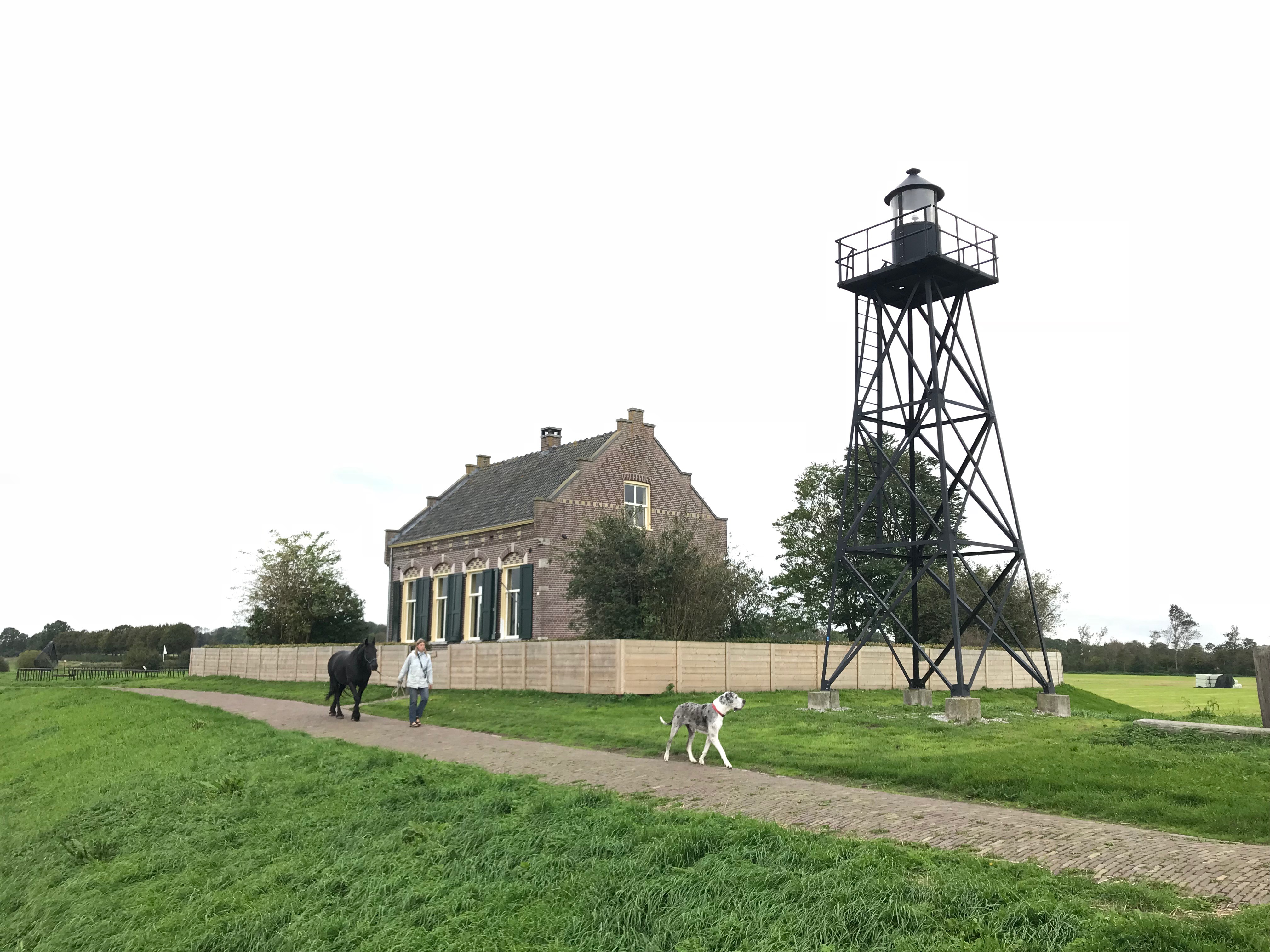 Anywhere else in the world, a former island would be considered extraordinary. In the Netherlands, however, such things are relatively common. In the area around Schokland several other former islands are scattered like beached whales, and there are countless towns and villages built on former seabed. About a quarter of the Netherlands lies below sea level, and huge swathes of the country consist of land which has painstakingly been drained to make it habitable. “God created the world,” as one local saying goes, “but the Dutch created the Netherlands.”
 drained the Great Park at Windsor and built the first pumping engine to supply London with fresh drinking water, “greatly to the astonishment of the Mayor and Aldermen”. In the economic sphere, the Bank of England was created with capital assistance from Amsterdam, and the first chairman of Lloyds was a Dutchman. Dutch immigrants funded scholarships for Dutchmen to attend Oxford and Cambridge, and Adam Smith’s ‘Wealth of Nations’ included a lengthy digression on the wonders of Dutch banking. Dutch nautical words like “yacht”, “sloop”, and “boom” entered the English language, while John Milton took Dutch language lessons and based large parts of ‘Paradise Lost’ on the poetry of Joost van der Vondel. In an era where swathes of Europe were still mired in poverty, the rise of the Dutch was, for the Brits, a thing of wonder. As Sir Josiah Child wrote in 1665: “the prodigious increase of the Netherlands in their domestic and foreign trade, riches and multitude of shipping is the envy of the present, and may be the wonder of all future generations”.
 would. Yet it’s also clear that the Netherlands and Britain still have an enormous amount in common. They’re both constitutional monarchies, with a benevolent king or queen leaving the day-to-day running to a prime minister and a bicameral parliament. As former colonial powers – they’re also both entrepreneurial, Atlanticist and somewhat hawkish; confident on the world stage and unafraid to project their power overseas.
 Debt is often frowned on, executive salaries are unspectacular, and houses are usually small. Even the wealthy often live surprisingly humble lives; dressing casually, cycling to work and eating homemade sandwiches for lunch. For years, these attitudes seemed to be reflected in property prices. In the Randstad (the urban heart of the Netherlands, where most of the population lives) it was until recently still possible to buy a fairly nice apartment for perhaps 100,000 euros, and a habitable one for perhaps half that; a fraction of what it would cost in some other countries. As a result, even in big cities like Rotterdam and the Hague, it wasn’t unusual to meet single people in their twenties, living on fairly low incomes, who owned their own homes – something which was almost unthinkable in London or New York.

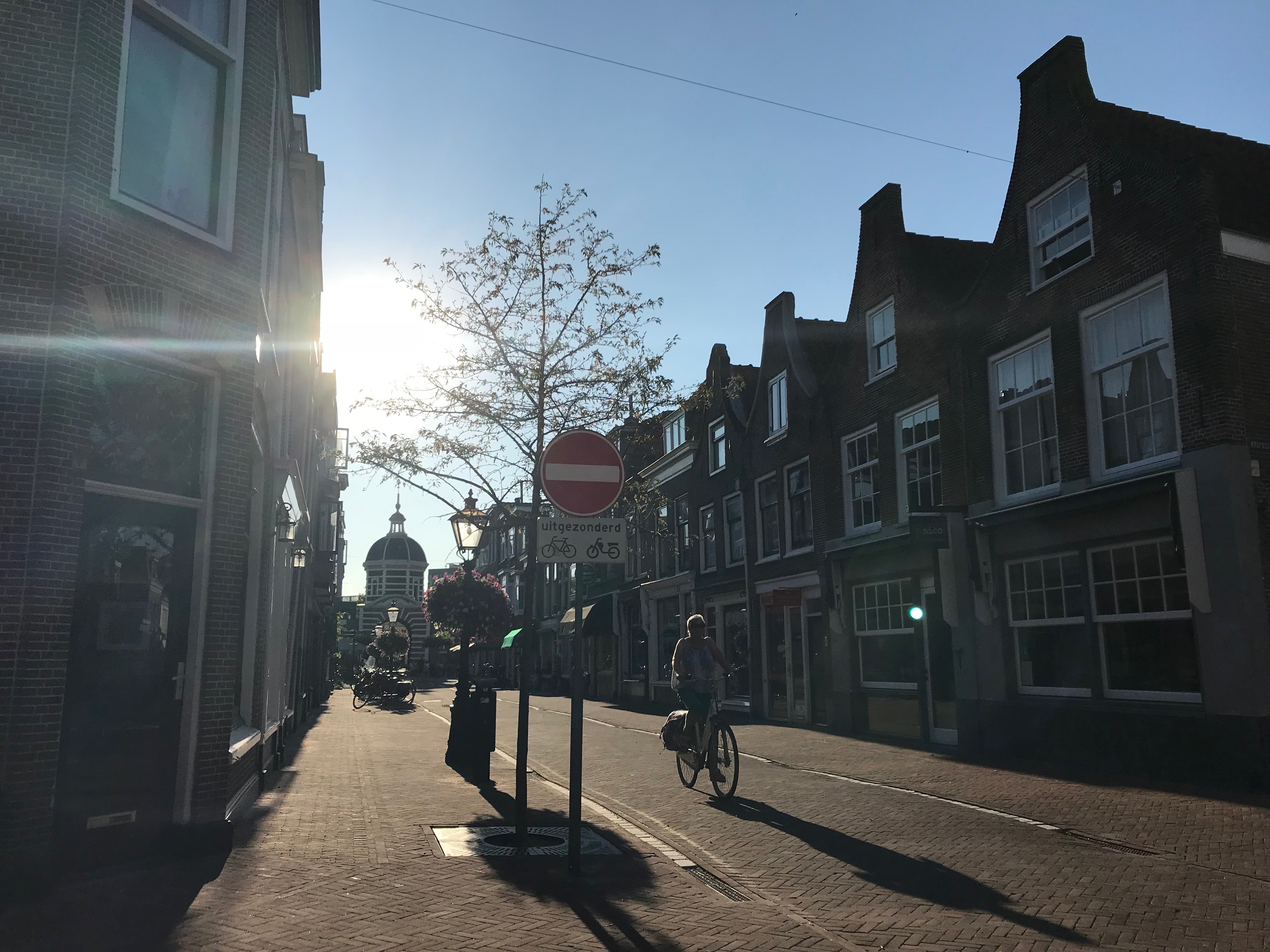 Browsing the properties, I was mildly disappointed to realise that prices had risen sharply yet again, and my wife and I probably could’ve made even more profit if we’d waited a few months. The couple standing next to me at the window didn’t seem to mind, though. A young woman with flowers tattooed on her arms pointed to a photo of an ugly modern apartment which was on sale for well over a quarter of a million euros. “We should buy something soon”, she told her boyfriend, “before it gets expensive”.
 It charges through not only Germany but also the Netherlands, France, Austria, Switzerland and Liechtenstein; going from an icy pool through rocky gullies, a country-sized lake, majestic cathedral cities, grassy polder meadows, hipster harbours and then finally a dazzling sandy beach. The river has also played a crucial role in the history of Europe, and is continuing to shape its future. Under the Romans, the Rhine served as the edge of the empire; the boundary at which the Romans effectively gave up trying to claim new territory and decided to build a beautiful big wall. (Caesar wrote that the tribes living north of the river “showed such determination in their bravery that when those in the front rank had fallen, the men behind them stood upon the slain and continued the fight from on top of the corpses”.) Later, the river was fought over countless times, by everyone from Napoleon to Bismarck and the Nazis. During the Cold War, NATO said it would fight “to hold the Rhine River bridges…at all cost”, and stockpiled hundreds of nuclear weapons along its banks. France and Germany have battled over its banks as regularly as teenaged siblings forced to share a bedroom.
 It has Europe’s biggest port at its mouth, and some of Europe’s most dynamic cities – Rotterdam, Dusseldorf, Strasbourg, Basel, Cologne – on its banks. As I cycled, swam, walked and boated my way up the river, I found it littered with odd and interesting sights: nuclear power stations converted into theme parks, thunderous waterfalls flinging spray into the air, rowdy nightclubs in converted warehouses, glittering modern skyscrapers and Gladiator-style coliseums. I also found it extraordinarily beautiful. In my twenties, I spent years travelling the world in search of perfect tropical sunsets and jungle ruins, but rarely saw anywhere as jaw-dropping as the source of the Rhine at Lake Toma; a shiny blue pearl dropped high in the snowy Swiss mountains.
 Austria had nearly elected a fascist as President, Angela Merkel had been battered in the polls, Donald Trump was gleefully igniting trade wars, and the British were doing their bit to promote free trade by leaving the world’s biggest free trade area. In the Netherlands, there are still serious problems with flooding and climate change, and some of the riverside towns which have grown rich from international trade are (ironically enough) hotbeds of isolationist politics. The French economy continues to stumble, and German manufacturing giants like Volkswagen have had their reputations tarnished. Many places along the river are extraordinarily beautiful and successful but others, like the former industrial town of Duisburg, are not. For a region which has long thrived thanks to its openness to the outside world, the rise of alt-right politics can seem like an existential threat.
 I learned about all sorts of things, from how the Romans brewed beer with ox-guts to what the French really think of the Germans, why the Swiss like shopping, why the Dutch eat so much cheese, and why gambling a book advance in a casino isn’t a good idea. Above all, writing about the Rhine helped me fall further in love with a region which I already knew well, but (like many people) had too often ignored in favour of more exotic things. I hope that (in due course) many of you will enjoy reading all about it, and fall in love with the Rhine too.
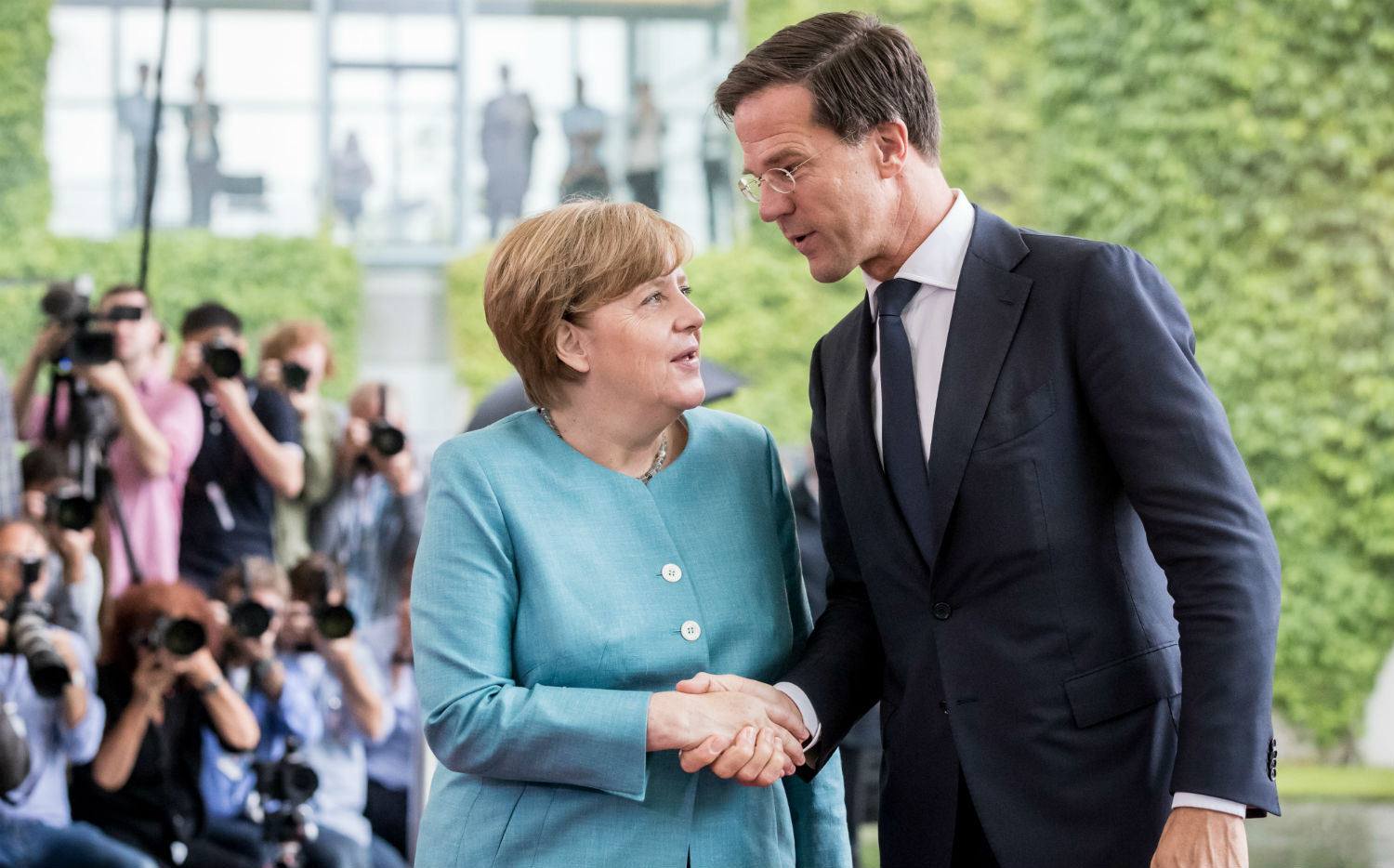 ‘Northern Alliance’ of conservatives standing up to the spendthrift ways of hapless Greeks and Italians. Under the new coalition government, with the leftish Labour Party (PvdA) now out of power, that dynamic looks set to continue. The new government has firmly ruled out Eurozone governments forming a joint budget, and said the creation of new Eurozone debt mechanisms would be “undesirable”. They’ve also made it clear that future bailouts will require investors to take involuntary “haircuts” on their debts; and said they’ll expect all EU member states to “fulfil their responsibilities”. This kind of stuff doesn’t exactly set the pulse racing, but is likely to please Merkel and disappoint people like Emmanuel Macron, who has his own grand plans to reform Europe. Post-Brexit, the EU may end up looking more Dutch than before.
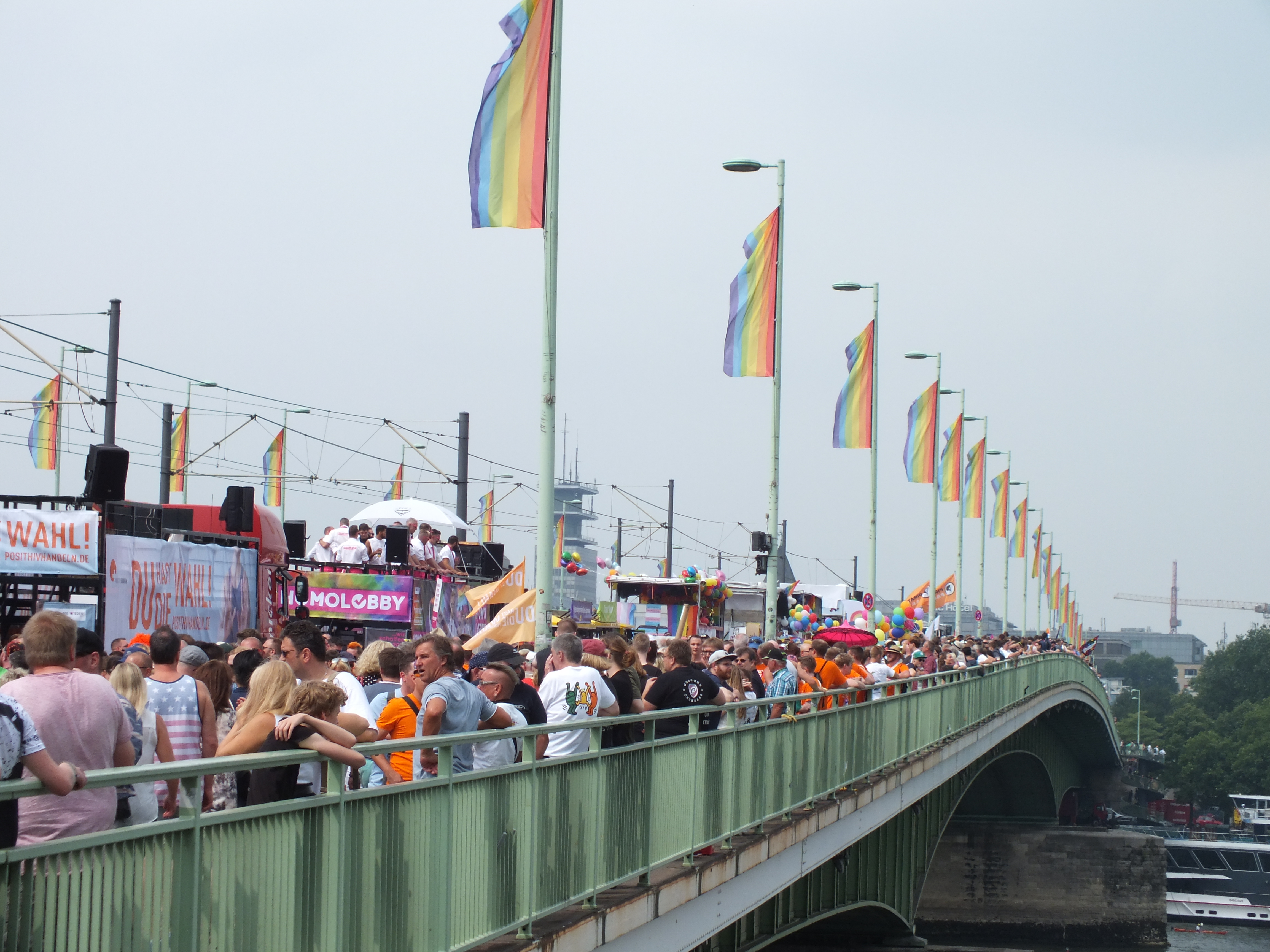
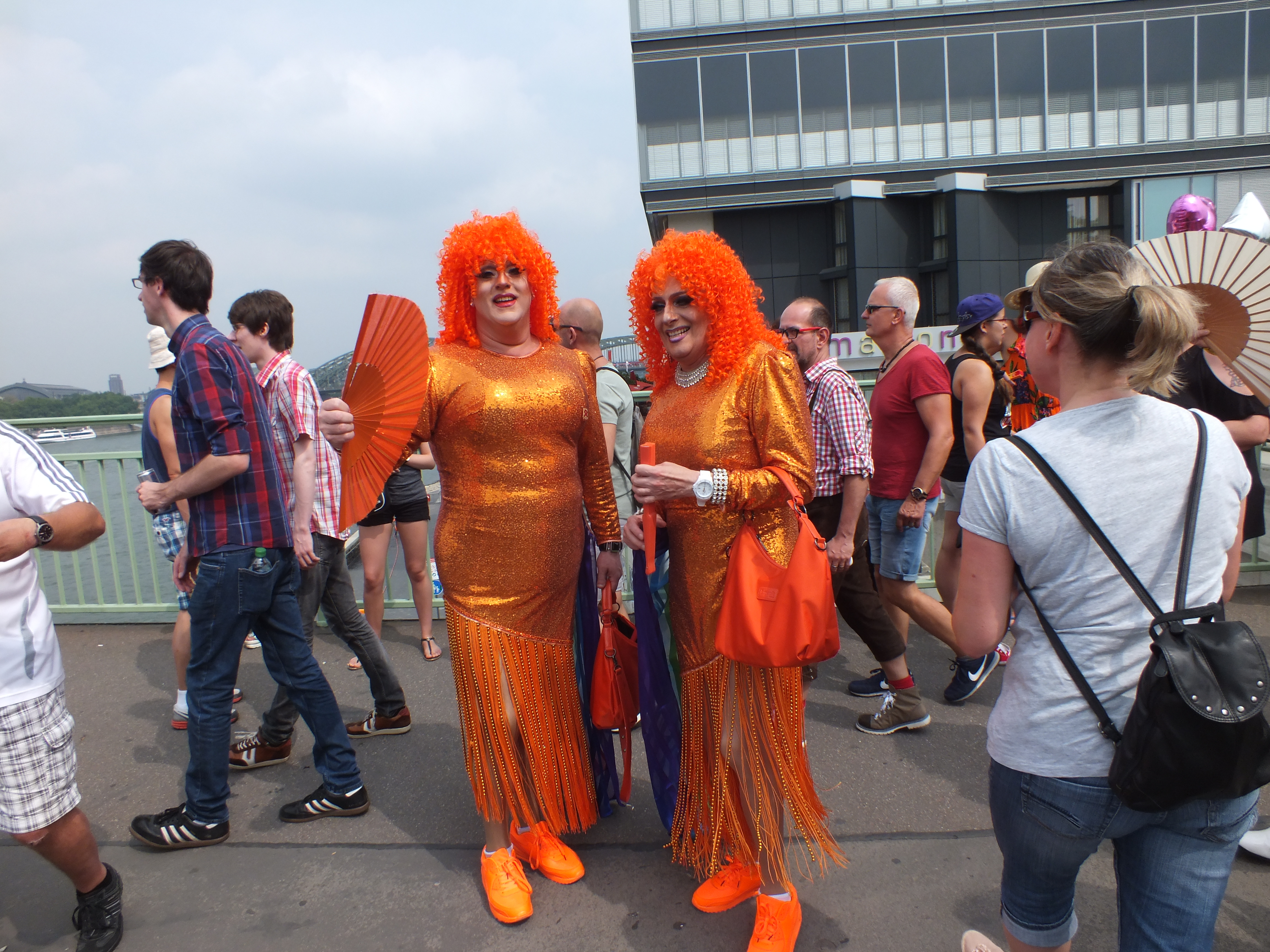 Answering a question from a member of the public, Merkel unexpectedly relaxed her opposition to same-sex marriage. Five days later, parliamentarians were allowed a free vote on the issue, and history was made. German politics isn’t usually known for its rapid pace, and the change came so quickly that even some supporters were left reeling – in Bonn last week, I met someone who was convinced that the whole thing was essentially a mistake, with a few careless words by Merkel triggering a vote which she’d never expected. The Chancellor herself has claimed that the shift was more deliberate, and she changed her mind after talking to two gay women in her constituency who were caring for eight foster children.
 Weighing the odds, she may have judged it was best to leap without looking for too long. U-turns on other issues like nuclear power and military conscription haven’t always been popular with her conservative base, but they have enabled her to keep firm control of the centre ground. By being flexible on gay marriage too, and allowing MPs to vote on the issue immediately, she’s effectively killed off the issue before the election campaign really gets started. Ever pragmatic, the Chancellor seems to have pulled off the neat trick of keeping both sides happy – personally opposing gay marriage while heading a government which makes it possible. One can’t help but wonder whether poor Theresa May (who once opposed gay marriage but then changed her mind and helped implement it as Home Secretary) would be quite so easily forgiven if she now voted against gay rights.
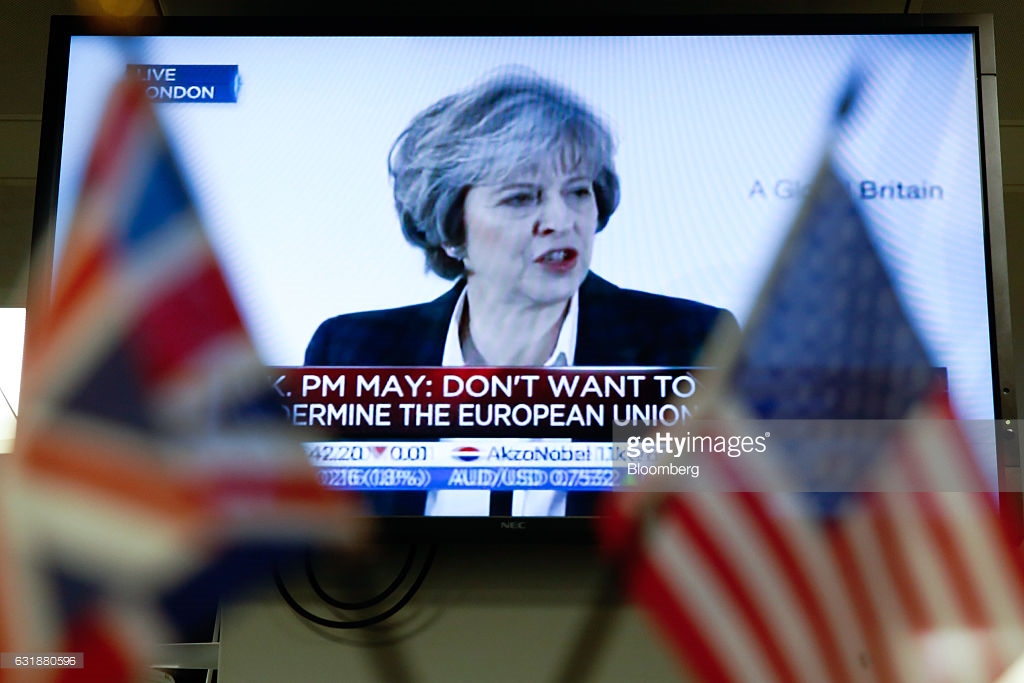 watching the election campaign unfold, it’s hard not to be disappointed by the petty domesticism of it all, and the extent to which leaders have focused on issues which could be designed to discourage first-time voters: grammar schools, dementia, inheritance taxes, fox-hunting and clamping down on internet freedom.
 Ben Coates