The Mixed Legacy of Pim Fortuyn
Fifteen years ago this weekend, the Dutch politician Pim Fortuyn attended a radio interview in Hilversum, a small town not far from Amsterdam.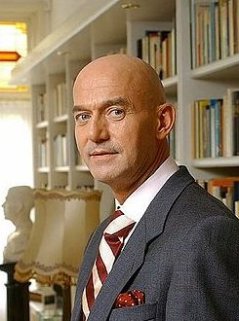 There was just over a week to go until the 2002 national elections, and opinion polls showed that that Fortuyn’s party was on track to win a significant number of votes – so many, in fact, that he might even become Prime Minister of the Netherlands. After a lively discussion of his future career prospects, Fortuyn left the studio, ready for his next engagement. But as he strode towards his Jaguar, a young man stepped forward and shot him several times. Fortuyn bled to death in the car park.
For the Netherlands – a country where no leader had been assassinated since William of Orange, more than three centuries previously – the assassination was a landmark event in the country’s history; a crime so heinous as to be profoundly “un-Dutch”. Thousands filled the streets in tribute to Fortuyn, and a sea of flowers swept across the pavement in front of his house in Rotterdam. A decade and a half later, the shock has naturally faded, and commemorations of the anniversary are largely low-key. However, long after his death, Fortuyn’s legacy remains significant.
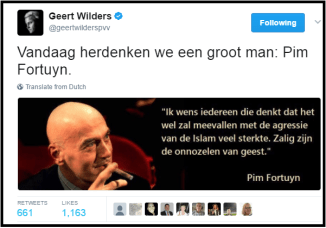
Most obviously, Fortuyn’s meteoric rise helped lay the foundations for a new kind of populism which was once rare, but now dominates headlines worldwide. Geert Wilders, for one, differs from Fortuyn in many ways, but is a clear ideological descendant. “Today we remember a great man”, Wilders tweeted on Saturday, before quoting Fortuyn on the “aggression of Islam”.
In today’s climate, it’s easy to forget just how revolutionary such populist sentiments once seemed. In the Netherlands, for much of the post-war era politics was sensible to the point of being utterly boring. Under the so-called ‘polder model’ of government, Dutch votes were usually split among a large number of political parties, and the Netherlands was run largely on the basis of compromise and negotiation. The convergence of major Dutch parties over several years made grand coalitions across the right/left divide possible, but also created a perception that nothing ever really changed. People who rose to the top in Dutch politics were usually boring technocrats rather than consensus-shattering Thatchers or Reagans.
In that context, Pim Fortuyn’s arrival on the scene was the political equivalent of a Groningen earthquake. He was flamboyant and outgoing; a snappy dresser with a soap-opera love life, who deliberately courted the media by saying things which others thought unsayable. “Ik zeg wat ik denk en ik doe wat ik zeg!” he liked to say. “I say what I think and I do what I say!” As tensions rose after 9/11, Fortuyn deftly exploited fears that the Netherlands was in decline and the Dutch had taken tolerance too far, looking the other way even as immigration undermined the very fabric of society. “This is a full country”, he once said. “I think 16 million Dutchmen are about enough.” Many Dutch were appalled by his views, but many others were thrilled: in March 2002, Fortuyn’s party stunned the establishment by winning more than a third of the vote in local elections in Rotterdam. Shortly afterwards, opinion polls showed that Fortuyn was among the front-runners to become the next Prime Minister, or at least secure a major role in a coalition government. Ultimately, history intervened and prevented that happening – but fifteen years on, it’s hard not to conclude that much Dutch political debate – including the recent Wilders-dominated election campaign – is still conducted in Fortuyn’s shadow. He was a populist before it was popular to be one.
Fortuyn’s other great legacy was to reset the parameters for political debate in the Netherlands. In almost every country, there are certain red lines which any sensible politician would never dare to cross. In America, for example, it’s all but impossible for prospective leaders to criticise the military, while in Britain it’s career suicide for a politician to express anything less than a deep love for the National Health Service. In general, the positions of these red lines are well-established along party lines: politicians who take a conservative stance on economic issues also take a conservative stance on social issues. Conservative Republicans and French National Fronters who aren’t keen on open borders and free trade are also not usually big fans of gay marriage. In the Netherlands, issues relating to race and immigration were long considered well over the red line – newspapers were restricted from reporting the race of criminal suspects, and any politician who criticised immigration risked a firestorm of criticism. Dutch tolerance only went so far.
Fortuyn, though, helped completely redefine those parameters, taking a strong right-wing stance on some issues while remaining very liberal on others. Crucially, he argued that his own intolerance of Islam was a means of safeguarding Dutch tolerance: when a Dutch imam famously said that homosexuals were “pigs”, Fortuyn said that the imam had a right to voice that opinion – but that Fortuyn himself also had a right to say that the imam’s religion was “backward” or “retarded”. Media interviews would move seamlessly from discussions of how much Fortuyn hated radical Islam to how much he enjoyed pursuing young men in Rotterdam’s gay bars. “I don’t hate Arab men – I even sleep with them”, he said. For all his outspokenness, the red lines which Fortuyn drew were clear: criticism of immigrants or Islam was fair game, but hostility towards gays, transsexuals, drug users, divorced people or single parents was beyond the pale. Nearly a generation later, these red lines still exist – Geert Wilders is happy to stand trial for promoting hatred against Moroccans, but staunchly defends gay rights. This careful straddling of fences also helps explain why Fortuyn’s reputation has survived relatively intact: in contrast with people like the Le Pens, he’s often remembered as someone whose views were controversial rather than hateful.
Looking back, it’s impossible to guess what might have happened had Fortuyn lived and won the elections. Looking around today’s Netherlands, and surveying its political scene, one suspects he would not approve. Yet whatever one’s politics, it’s fairly certain that if Fortuyn had risen to power, many of his cheerleaders would have turned against him sooner or later. In the worst case, his anti-immigrant policies might have been taken to their logical, Trumpian conclusion: discrimination and deportations on the polder. In the best case, a Prime Minister Fortuyn might have stayed true to his better instincts, but still ended up disappointing those who hoped he’d deliver radical change, just as every other inspiring leader from Blair to Obama (and, soon, Emmanuel Macron) inevitably does. Either way, to many Rotterdammers, he remains an iconic figure: a kind of Dutch Princess Diana, about whom it’s impossible to say a bad word.

 volcanically in last year’s election. There were many reasons for Donald Trump’s victory, but one was the abject failure of the Democrats to find a presidential candidate who could appeal to voters who felt trampled rather than rewarded by globalisation. In the Netherlands, the situation is far less extreme. There’s plenty of space for fringe voices in politics, and it’s hard to portray Wilders – a well-educated professional politician – as an authentic ‘man of the people’. The elevation of the thirty-year-old Dutch-Moroccan-Indonesian Jesse Klaver to within grasping distance of a cabinet seat also seems like a step in the right direction. However, it’s notable that the leaders of the seven largest parties in parliament are all men who have spent most of their working lives in politics. It’s easy to see why a blue-collar worker in Rotterdam might feel little affinity with centrist, managerial leaders like Rutte and his new allies, who speak fluent IMF and look like the kind of guy who fires you.
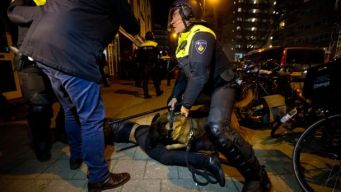
 as part of a campaign to strengthen the powers of the already-authoritarian President Recep Tayyip Erdogan. What should have been a minor diplomatic squabble over the cancelled event quickly spiralled out of control, with the Turkish government threatening to impose sanctions, the Turkish Foreign Minister saying the Netherlands was the “capital of fascism” and Erdogan himself saying the Dutch were “Nazi remnants”. When the Turkish Foreign Minister’s plane was refused permission to land in the Netherlands another Turkish minister tried to travel overland to Rotterdam from Germany, but had her convoy stopped by Dutch police at a petrol station, and was forced to drive back over the border. By Saturday evening, President Erdogan’s supporters were protesting violently outside the Turkish consulate in Rotterdam. Crowds of mostly young men threw bottles and rocks at police, who pushed back with baton charges, dogs and water cannon. Twelve people reportedly were arrested and seven injured. Amid the broken bottles and hurled bricks, an election which had started to look like a foregone conclusion suddenly looked anything but.
 begun looking increasingly shaky.
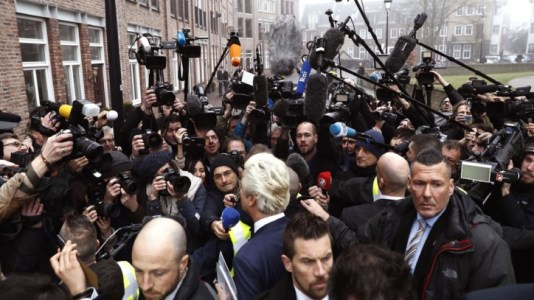
 Yesterday, as police maintained a defensive line around the Turkish consulate in Rotterdam and pro-Erdogan stickers were chiselled from tram stops, a small plane was seen circling overhead, trailing a long banner encouraging locals to vote for Wilders’ party.
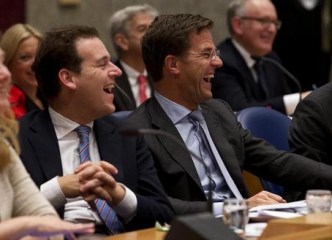 Since 2012, the PvdA has been a coalition partner in government, and currently holds major cabinet seats including the Deputy Prime Minister, Foreign Minister and Finance Minister. Now, though, the PvdA suddenly finds itself staring into the abyss. Polls predict that the party’s share of the vote will slump to perhaps a quarter of its previous level, and that it will lose around 70 percent of its seats in parliament.
 leaders like Tony Blair and Gerhard Schroder, but then made itself unpopular by introducing spending cuts which appalled traditional supporters. At the same time, centre-right leaders like David Cameron began pinching some of the left’s most popular policies: school reform, minimum wages, environmental protection and gay marriage. Simultaneously, far-right populists like Wilders began stealing voters from the left’s traditional base, with promises to cut immigration, cut taxes, and take back control from the governing elites. As a result, the Dutch PvdA aren’t the only leftists in trouble – France’s Socialists are about to lose power, Italy’s Matteo Renzi has been forced to resign, and the UK Labour Party is in an abysmal state. In the US, the Democrats are also still reeling from a crushing defeat. As the commentator René Cuperus put it, social democrats in the Netherlands and elsewhere find themselves stuck as “neither opponent nor engine”, unable to disagree strongly with much of what the government does, but also unable to articulate a significantly better way of doing things.
 A large proportion of former PvdA voters now say they either don’t know who to vote for, or won’t bother voting at all. Perhaps the biggest question, though, is how the PvdA will react to a disappointing result. Can the party find new leaders who are more in tune with the public mood? Can they develop new policies which win back disillusioned ethnic minorities voters and blue-collar workers, while also appealing to urban liberals? Can they return to government without further compromising their values? Or will they, like UK Labour Party, keep marching down the road to oblivion?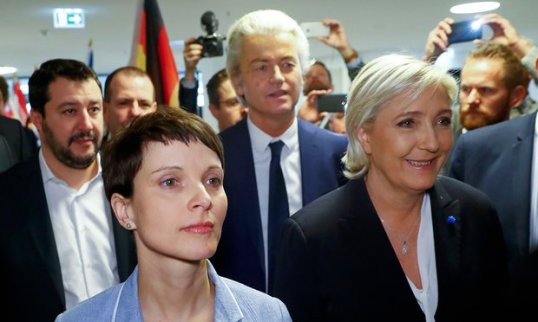
 most experts agreed
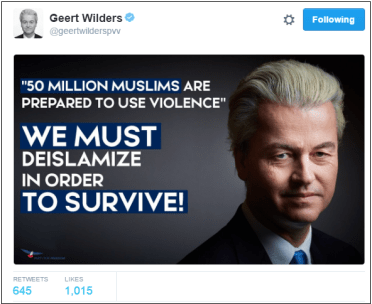 blocked by either a lack of votes of a lack of allies willing to form a coalition with him. Foreign observers in particular often seem to assume that while the sensible, down-to-earth Dutch might enjoy a bit of bellyaching about immigration and ISIS, and find Wilders’ antics amusing, they would never actually let him run the country. In that context, one can’t help but wonder: could we see some variation of the Bradley effect in the Netherlands? Like patients lying to a doctor about how much alcohol they drink, might Dutch voters who say they oppose Wilders actually end up supporting him?
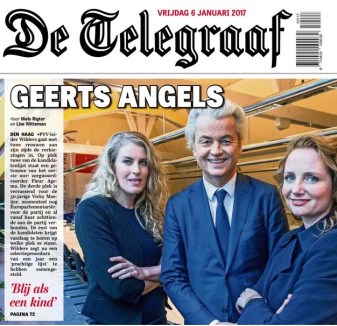 “get out of here [and] go back to Turkey”. This kind of talk seems to be popular these days, and the most likely outcome of the election is that Rutte keeps his job. But Wilders’ effect on the debate has already been profound. In a political system where votes are split across many parties, and where coalition governments are the norm, there’s a real chance that he could end up in power; if not as Prime Minister, then with a seat at the cabinet table. It’s also worth remembering that the Netherlands has a track record of disappointing pollsters – in 2005, for example, voting against the EU Constitution. As the editors of The Economist once lamented, after they’d guessed another election wrong, “The Dutch have developed an uncanny ability to surprise everyone with their political choices”.
 but something which happens every year. According to Dutch myth, Sinterklaas (Santa Claus) spends much of each November and December travelling around the Netherlands, accompanied by his dark-skinned helpers, Zwarte Piet (Black Pete). In towns and cities nationwide, adults and children turn out to welcome them, dressed for the occasion in Zwarte Piet costumes of their own: brown or black face paint, curly ‘Afro’ wigs, thick lipstick and chunky gold earrings. ‘Comedy’ African accents are not unheard of. To many outsiders, it all makes for a shocking spectacle; jarringly at odds with the Netherlands’ reputation as one of the world’s most tolerant and progressive countries. To most Dutch people, however, the tradition remains entirely unremarkable – as integral a part of the festive season as turkey and stuffing are elsewhere.
 The Dutch are famous for taking a tolerant approach to many aspects of life; from drug use to euthanasia, prostitution to same-sex marriage. This live-and-let-live attitude is part of what makes the country so appealing, but it can also throw up strange contradictions when one person’s exercise of freedom inconveniences another. In a country where individual rights are sovereign, it’s fine to shout in a residential street at midnight, fine to talk noisily in a ‘silent’ train carriage, and – yes – fine to dress up in a costume which others find offensive. For the Dutch, being tolerant includes respecting the right to do things which others think are intolerant.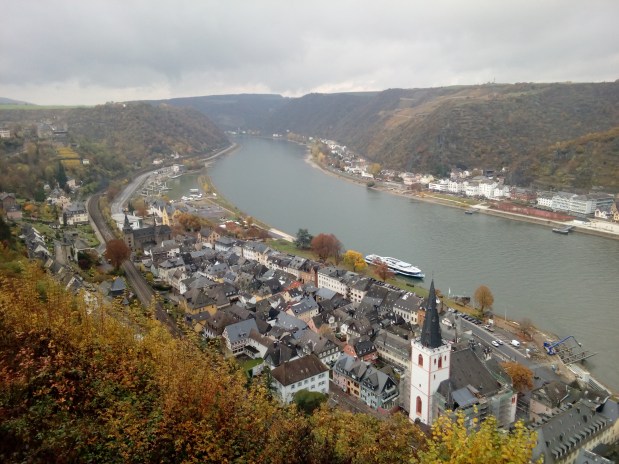
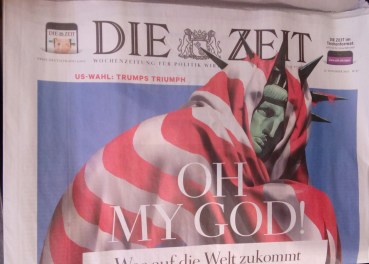 Like many others, the Germans will be forced to cooperate with Trump on many issues, but are likely to be appalled by his policies. The message of congratulations which Angela Merkel sent Trump yesterday provided a masterclass in political wordplay: she said she looked forward to “close cooperation” with the new administration, but also said that such cooperation must be based on “values of democracy, freedom and respect for the law, and the dignity of man, independent of origin, skin colour, religion, gender, sexual orientation or political views”. The contrast with Theresa May’s vapid statement that she “looked forward to working with President-elect Donald Trump” on “trade, security and defence” was stark.
 Elections are due to be held in Germany next year, and Merkel’s party is now polling nearly ten points behind the Social Democrats, with whom they currently share power. The right-wing Alternative for Germany (AfD), founded just a few years ago, has attracted many supporters with its anti-immigrant rhetoric, and already holds seats in more than half of the country’s state assemblies. As German Finance Minister Wolfgang Schäuble warned this morning, “demagogic populism is not a problem only in America. Elsewhere in the West, too, the political debate is an alarming state”. Merkel – along with the likes of Hollande, Renzi and Rutte – will be hoping that Trump’s triumph isn’t easy to repeat on this side of the Atlantic. As American history becomes increasingly like the plot of a Philip Roth novel, the implications for Europe remain unclear. “Was nun?” the Allgemeine Zeitung asked on its front page this morning; what now? So far, no-one knows.
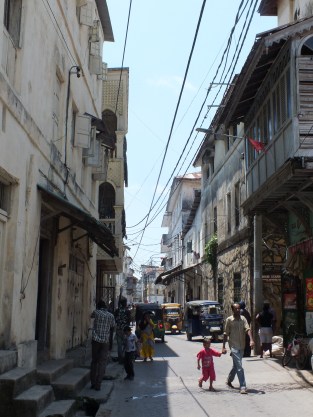 However, a second group of Brits in Africa takes a rather different view. People who one might think of as old colonials – white Brits who’ve lived in Africa for years – seem to be disproportionately in favour of Brexit. Well-educated and rather upper-class, they still have deep ties to the UK despite living abroad for decades, and have perhaps a stronger sense of history and identity than those who’ve never had to think about which country they should call ‘home’. Several of those I spoke to were curmudgeonly about many things, but surprisingly optimistic about the future of Britain outside Europe. Some even seemed to see Brexit as a way for Britain to reclaim the global role which it enjoyed in the heyday of empire in Africa. Out on the Swahili coast of Kenya, I met one old Englishman who’d spent more than twenty years working as a doctor in the tropics. For him, Brexit represented not a retreat into isolationism but a great stride back onto the world stage. “Now we can finally stop being obsessed with this tiny little corner of northern Europe”, he said. “We might trade a bit less with France and Germany, but we can trade more in Africa, in Asia, in Latin America. We haven’t left anything! We’ve joined the world!” A few days later, another ageing British expat in the mountains of eastern Uganda expressed similar sentiments. “The EU is nothing but a great big scam, designed to help the bankers and lobbyists. But now we’re free at last, ready to rejoin the wider world!” Ending his diatribe against the EU’s colonialist and elitist tendencies, he brusquely ordered one of his black servants to bring him another pot of tea.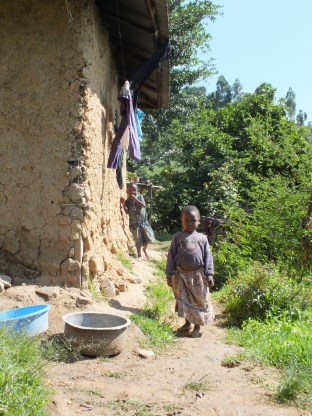


 The fourth classroom was filled with a mighty jumble of broken, unused desks, which looked as if they had been dumped there by a passing hurricane.
 clinic, where the patient was loaded carefully into the back seat. With her moaning behind me, I drove off as quickly as I dared, bouncing along the dirt road to Zomba, leaving the empty Potemkin village behind. As Professor Stanley Hoffman wrote during the Vietnam War, the road to hell is often paved with good intentions.
 Ben Coates